
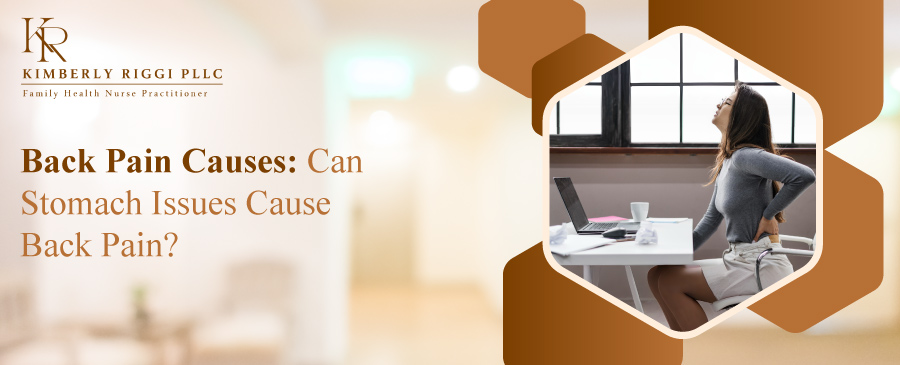
Back Pain Causes: Can Stomach Issues Cause Back Pain?
Can stomach issues cause back pain? The answer is yes—and it may be more common than you think. If you’ve been experiencing stomach discomfort along with back pain, the two symptoms could be connected. Your digestive system and spine share nerves, muscles, and connective tissues, so problems like inflammation, bloating, or constipation can sometimes cause pain that spreads to your back. Pressure from gas or a swollen abdomen may also strain nearby muscles, leading to upper back pain or low back pain.
At Kimberly Riggi (Your Family Health Nurse Practitioner), we identify the root cause of your symptoms not just the pain. Through comprehensive evaluation and personalized treatment, we help relieve stomach issues, ease back pain, and support your recovery.
Why Are Your Stomach and Back Connected?
It may seem surprising, but your stomach and back are connected in several ways. Shared nerves, surrounding muscles, and pressure within the abdomen all work together, that is why a digestive problem can sometimes be felt as back pain instead of stomach pain alone. There are three main reasons why stomach problems can lead to back pain:
Shared Nerve Pathways (Referred Pain)
Your stomach and back send pain signals through some of the same nerves. This is called referred pain. Because these nerves communicate with the same areas of the brain, pain from your stomach may sometimes be felt in your back. As a result, a digestive problem may cause discomfort in your back, even when your spine and muscles are perfectly healthy.
Pressure from the Abdomen
Gas, bloating, constipation, or a swollen abdomen can put extra pressure on the muscles and tissues around your lower back. This added pressure may leave your back feeling sore, stiff, or uncomfortable. Can constipation cause back pain? It can happen when stool builds up in the colon and presses on nearby muscles and nerves, creating discomfort that may be felt in the lower back.
Changes in Posture
When your stomach hurts, it’s natural to adjust your posture to feel more comfortable and that change may help ease the pain. You may hunch over, bend forward, or avoid standing up straight. Staying in these positions for too long can tighten your back muscles and strain your spine, which may lead to lower back pain or make existing discomfort worse.
Common Digestive Conditions That Can Cause Back Pain
Not every stomach problem causes back pain, but some digestive conditions can irritate nearby nerves, create pressure in the abdomen, or trigger pain that spreads to your back. These include:
Irritable Bowel Syndrome (IBS)
IBS is a common digestive disorder that affects how the intestines work. Although it does not damage the digestive tract, it can cause uncomfortable symptoms that sometimes affect your back.
Common Symptoms:
Stomach cramps, Gas and bloating, Diarrhea or constipation
How it can affect your back:
Gas, bloating, and muscle tension during IBS flare-ups may contribute to low back pain. Depending on where the discomfort is felt, some people may notice lower left back pain, especially when bloating or constipation is more severe.
Inflammatory Bowel Disease (IBD)
IBD, including Crohn’s disease and ulcerative colitis, causes ongoing inflammation in the digestive tract. Unlike IBS, it can damage the lining of the intestines over time.
Common Symptoms:
Abdominal pain and cramping, Persistent diarrhea, Fatigue, Weight loss
How it can affect your back:
Chronic inflammation and muscle tension may cause back discomfort in some people.
Gastritis
Gastritis occurs when the stomach lining becomes inflamed. It may develop after an infection, long-term use of certain medicines, or excessive alcohol consumption.
Common Symptoms:
Burning pain in the upper stomach, Nausea, Indigestion
How it can affect your back:
Some people experience upper back pain or discomfort between the shoulder blades.
Peptic Ulcers
Peptic ulcers are open sores that develop in the lining of the stomach or the upper part of the small intestine.
Common Symptoms:
Burning stomach pain, Bloating, Feeling full quickly
How it can affect your back:
The pain may radiate from the stomach to the upper back, especially if the ulcer becomes more severe.
Constipation
Constipation happens when stool moves too slowly through the colon, making bowel movements difficult.
Common Symptoms:
Hard stools, Bloating,A feeling of fullness
How it can affect your back:
A full colon can place pressure on nearby muscles and nerves, leading to lower back pain. The discomfort may sometimes be felt as lower left back pain, particularly when stool builds up in the lower part of the colon.
Gallstones
Gallstones are crystallized deposits (sizes range from a grain of sand to a golf ball) that form when an imbalance occurs in the substances making up bile, primarily cholesterol and bilirubin.
Common Symptoms:
Sharp pain in the upper right abdomen, Nausea or vomiting, Pain after eating fatty foods
How it can affect your back:
The pain may spread to the right shoulder or upper back. Some people may also experience pain in the upper right side of the back.
Pancreatitis
Pancreatitis is the inflammation of the pancreas, an organ crucial for digestion and regulating blood sugar. A long-term condition that causes permanent scarring and irreversible damage to pancreatic tissue.
Common Symptoms:
Severe upper abdominal pain, Nausea or vomiting, Fever
How it can affect your back:
The pain often travels straight through to the middle of the back and should be evaluated by a healthcare provider as soon as possible.
Could It Be Something Other Than Your Stomach?
Not all back pain with stomach discomfort is caused by a digestive problem. Several other conditions can cause similar symptoms, so it’s important not to assume your stomach is always the source of the pain.
Some possible causes include:
- Kidney stones: Sharp pain that often starts in the side or back and may spread to the lower abdomen or groin.
- Kidney infection: Back pain accompanied by fever, chills, painful urination, or frequent trips to the bathroom.
- Muscle strain: A pulled muscle from lifting, exercise, or poor posture can cause back pain without any digestive issue.
- Herniated disc: A spinal disc pressing on a nerve may cause pain, numbness, or tingling that travels through the back or legs.
- Spinal arthritis: Wear and tear in the spine can lead to stiffness, ongoing back pain, and reduced movement.
If you’re unsure what’s causing your pain, especially if it is severe, persistent, or comes with other concerning symptoms, it’s best to see Kimberly Riggi for an accurate diagnosis. Because there are many possible lower back pain causes, identifying the underlying condition is the key to getting the right treatment.
Warning Signs You Should Never Ignore
Not every stomach ache that causes back pain is dangerous, but some symptoms should never be ignored because they may point to a medical emergency.
Watch for signs such as:
- Severe abdominal pain with back pain
- Fever
- Persistent vomiting
- Blood in your stool or vomit
- Unexplained weight loss
Some medical conditions also need immediate treatment. Appendicitis usually causes pain in the lower right side of the abdomen and may also cause lower right back pain in some people. It can become serious if the appendix bursts and requires immediate medical attention. Pancreatitis often causes severe upper abdominal pain that spreads to the back and requires prompt medical care. Although rare, an abdominal aortic aneurysm is a life-threatening emergency that can cause sudden, intense pain in the abdomen or back.
Stomach and Back Pain Relief and Prevention Strategies
Making a few healthy lifestyle changes can support your digestive health and help reduce back pain.
- Eat more fiber: Fruits, vegetables, whole grains, and beans help keep your digestive system moving.
- Stay hydrated: Drinking enough water supports healthy digestion and helps reduce the risk of stomach issues in summers caused by dehydration.
- Improve your posture: Sit and stand upright to reduce strain on your back.
- Stretch regularly: Gentle stretching can ease muscle tightness and improve flexibility.
- Keep moving: Walking and exercises for lower back pain can strengthen your back and support better movement.
- Manage stress: Relaxation techniques like deep breathing or meditation can benefit both your gut and your back.
- Seek treatment early: Don’t ignore persistent stomach issues symptoms. Early care can prevent complications and improve recovery.
Don’t ignore ongoing stomach discomfort or back pain. At Kimberly Riggi (Your Family Health Nurse Practitioner), we provide personalized evaluations and treatment to help identify the root cause of your symptoms. Visit us at 9 Clifton Country Rd, Clifton Park, NY 12065, and get the compassionate care you need.
Conclusion
By now, it’s clear that stomach issues can cause back pain. Digestive problems such as constipation, gastritis, IBS, or gallstones may lead to back pain through shared nerves, pressure in the abdomen, or changes in posture. Finding the real cause is the first step toward getting the right treatment. If your symptoms are severe, keep coming back, or don’t improve, don’t ignore them—schedule an appointment with us for a proper evaluation.
Frequently Asked Questions
In some cases, trapped gas can create pressure inside the abdomen, causing pain that spreads to the back. The discomfort usually improves once the gas passes, but persistent or severe pain should be evaluated.
A full bowel can place pressure on nearby muscles and nerves, leading to temporary back pain. The discomfort often improves after a bowel movement, especially if constipation is the cause.
Yes, stress can affect the gut-brain connection, increasing muscle tension and worsening digestive symptoms, which may contribute to both stomach pain and back pain.
Ongoing digestive problems such as bloating, constipation, or inflammation may increase pressure on nearby tissues or trigger referred pain, making back discomfort feel more noticeable.

Operating Hours
Monday - Thursday
08.00 AM - 04.00 PM
Friday - Sunday
Closed


Schedule an Appointment
Latest Blogs
Kimberly Riggi PLLC | Powered By DocsMed © 2026 All Rights Reserved